
Galápagos Islands
Six hundred miles from the nearest coast, in the middle of the Pacific Ocean, lies a place unlike anywhere else on Earth. The Galápagos Islands are not just a destination - they are an experience that changes the way you see the natural world.
There is a moment that almost every visitor to the Galápagos describes - and it is always the same. You are standing on a path, or sitting on a rock, or floating in the water, and an animal comes toward you. Not cautiously. Not briefly. It simply walks up, or swims alongside, or lands beside you, and carries on with its life. A sea lion. A blue-footed booby. A marine iguana. A giant tortoise. And you realise, perhaps for the first time, what it feels like to be in a place where humans are not feared.
This is what makes the Galápagos unlike any other wildlife destination on Earth. The animals here have no natural predators and no history of persecution - which means they have no reason to flee. The result is a level of intimacy with the natural world that simply cannot be replicated anywhere else on the planet.
The Galápagos archipelago - a chain of 19 islands and dozens of islets of volcanic origin - lies 600 miles off the coast of Ecuador in the Pacific Ocean. It was here that Charles Darwin, during his 1835 visit aboard the Beagle, observed the variations between species on different islands that would lead him to develop his theory of evolution by natural selection. Nearly two centuries later, the islands remain one of the world's most important living laboratories of nature - and one of its most extraordinary places to visit.
Andean Dreams works with a carefully curated selection of yachts, expedition vessels, and lodges to craft Galápagos experiences that are as exclusive and personal as the islands themselves.
The Islands
No two islands in the Galápagos are alike. Each has its own geology, its own ecosystems, its own wildlife communities, and its own atmosphere. Which islands you might visit within your time-frame is one of the most important decisions in planning a Galápagos journey, and one where our experience makes a real difference.
Santa Cruz
The most visited and most populated island in the archipelago, Santa Cruz is home to Puerto Ayora - the main town - and the Charles Darwin Research Station, where giant tortoises are raised for reintroduction into their natural habitats. The lush Highlands offer the chance to encounter free-roaming giant tortoises and explore ancient lava tubes. A natural starting point for any Galápagos journey, and endlessly rewarding in its own right.
Isabela
The largest island in the archipelago by a considerable margin, Isabela is dominated by five shield volcanoes - including Sierra Negra, one of the world's largest active calderas. Its extraordinary variety of landscapes and ecosystems make it one of the richest islands for wildlife: Galápagos penguins, flightless cormorants, marine iguanas, sea lions, and flamingos can all be found here. Las Tintoreras, Los Túneles, and the Humedales wetlands are among its highlights.
Fernandina
The youngest, most westernmost, and most pristine island in the Galápagos - untouched by invasive species and almost entirely protected. Espinosa Point, its sole visitor site, offers encounters with the world's largest colony of marine iguanas, Galápagos hawks, flightless cormorants, and penguins, in a landscape of raw, otherworldly volcanic beauty. One of the most extraordinary places in the entire archipelago.
Española
The oldest island in the Galápagos and the only nesting site of the waved albatross. Española is also home to Nazca boobies, blue-footed boobies, marine iguanas with a distinctive reddish colouring, and the blow hole at Punta Suarez - one of the most dramatic natural features in the islands. A highlight of any southern itinerary.
North Seymour
A small, flat island of uplifted submarine lava, North Seymour is one of the finest wildlife-watching sites in the archipelago. Home to the largest breeding colony of magnificent frigatebirds in the Galápagos, as well as large numbers of blue-footed boobies, land iguanas, sea lions, and marine iguanas. Its compact size makes it ideal for a morning or afternoon visit.
Bartolomé
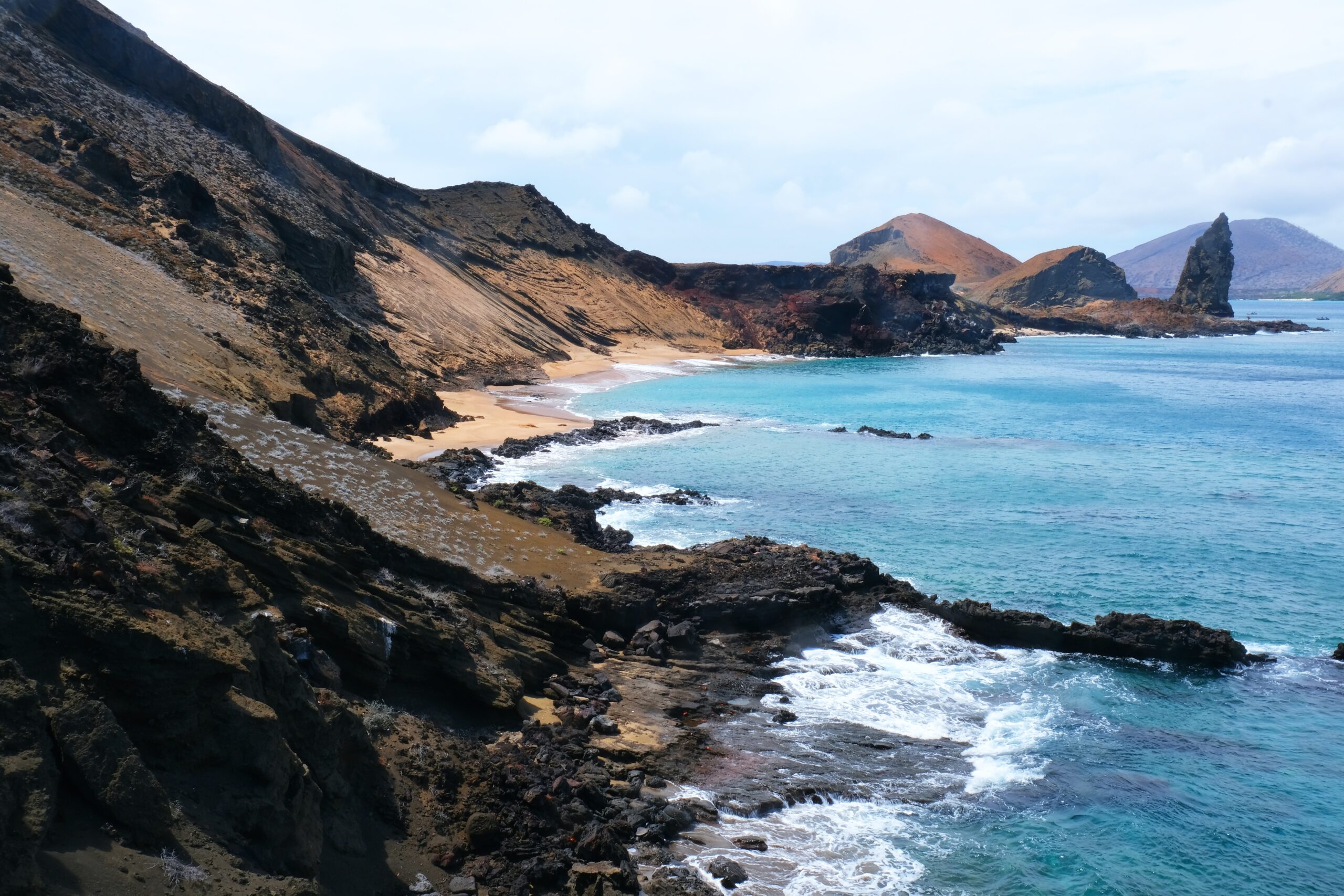
Iconic for its dramatic volcanic landscape and the famous Pinnacle Rock - one of the most photographed sights in the Galápagos. The summit offers panoramic views across the archipelago, while the sheltered cove below is one of the best places in the islands to snorkel with Galápagos Penguins. The lunar-like lava fields, traversed on a wooden boardwalk, are a reminder of the raw geological forces that created this extraordinary place.
South Plaza
A tiny island that packs extraordinary biodiversity into a small space. Land iguanas, hybrid iguanas, sea lions, swallow-tailed gulls, and Sesuvium plants that turn vivid red in the dry season make South Plaza one of the most visually striking and rewarding short visits in the archipelago.
Genovesa
Known as Bird Island - and for good reason. Genovesa is home to enormous colonies of red-footed boobies, Nazca boobies, frigatebirds, and the largest concentration of short-eared owls in the Galápagos. Its remote position in the far north of the archipelago means it is less frequently visited, making it a rewarding destination for those seeking a quieter, more extraordinary experience.
The Wildlife
The Galápagos is home to an extraordinary concentration of endemic species - animals and plants found nowhere else in the world. Each island has its own distinct ecosystems and inhabitants, meaning that every day of a Galápagos journey brings entirely new encounters. Here are some of the remarkable creatures you may meet.
Galápagos Giant Tortoise
The iconic symbol of the archipelago and one of the longest-lived animals on Earth - some individuals are believed to have lived for over 170 years. Different subspecies evolved on different islands, varying in the shape of their shells depending on the vegetation available to them. Encountering a giant tortoise in the wild - lumbering slowly across a highland reserve, entirely indifferent to your presence - is one of the most memorable wildlife experiences imaginable.
Marine Iguana
Found nowhere else on Earth, the marine iguana is the world's only ocean-going lizard - a remarkable adaptation to island life that allows it to dive into the cold Pacific to graze on underwater algae. They gather in vast, prehistoric-looking colonies on the black lava shores, warming themselves in the sun. On Fernandina Island, the largest colonies in the archipelago can number in the thousands.
Land Iguana
Larger and more colourful than their marine cousins, land iguanas feed primarily on the prickly pear cactus. They can be found on several islands, including North Seymour, Isabela, and South Plaza - where hybrid individuals, the offspring of land and marine iguana pairings, have also been observed.
Galápagos Sea Lion
Playful, curious, and utterly charming - the Galápagos sea lion is perhaps the animal most likely to make you laugh out loud. They sleep on benches, crowd onto boats, and rocket through the water around snorkellers with effortless grace. Their pups are among the most endearing creatures in the natural world.
Green Sea Turtle
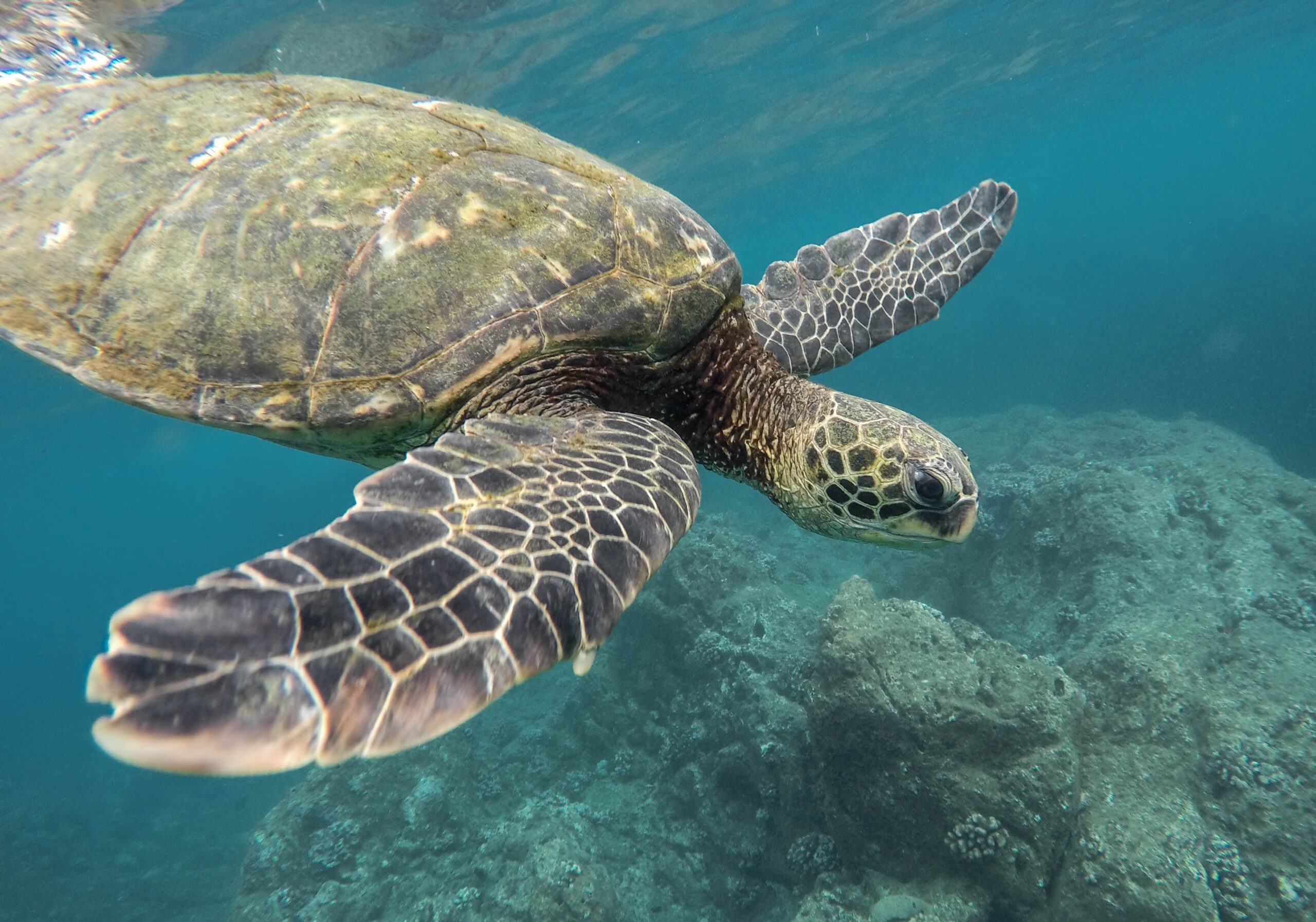
The warm, clear waters of the Galápagos are one of the world's most important nesting grounds for the Pacific green sea turtle. Snorkelling alongside these ancient, graceful creatures as they glide through the water is an experience of quiet wonder.
Galápagos Penguin
The only penguin species found in the Northern Hemisphere - a remarkable result of the cold Humboldt Current reaching the equator. Small, fast, and endlessly entertaining both underwater and on land, they can be found primarily on Fernandina and Isabela, with smaller populations on Bartolomé and other islands.
Blue-footed Booby
Perhaps the most beloved bird in the Galápagos, the blue-footed booby is famous for its extraordinary courtship dance — the male lifting his improbably turquoise feet in a high-stepping display, sky-pointing his bill, and spreading his wings to impress a potential mate. Their colonies on North Seymour and Española are among the most entertaining wildlife spectacles in the archipelago.
Magnificent Frigatebird
The male magnificent frigatebird inflates a brilliant scarlet throat pouch to attract females - a display so theatrical and vivid it is almost difficult to believe. Their enormous wingspans and aerial agility make them one of the most striking birds in the Galápagos skies.
Waved Albatross
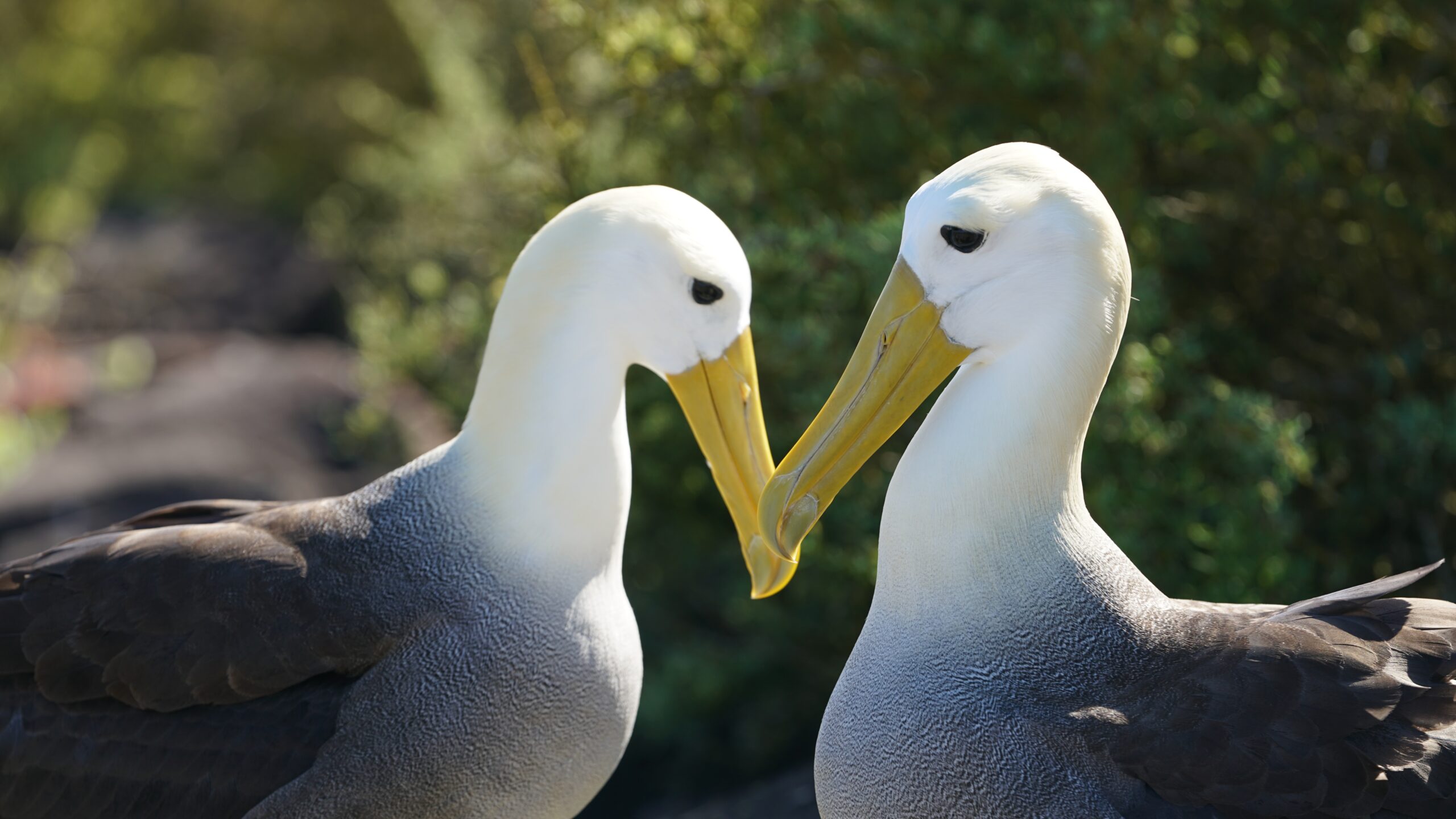
Found in the Galápagos only on Española Island, the waved albatross has the largest wingspan of any bird in the archipelago. Their elaborate, almost comedic courtship rituals - involving bill-circling, sky-pointing, and honking calls - are one of the great wildlife spectacles of the natural world. They are present on Española from April to December.
How to Explore
There are two primary ways to experience the Galápagos - by sea, aboard a cruise vessel or private yacht, or by land, based from one of the inhabited islands. Each has distinct advantages, and for many travellers the ideal experience combines elements of both. We will help you decide which approach best suits your interests, your group, and the time you have available.
By Sea - Cruise & Private Yacht
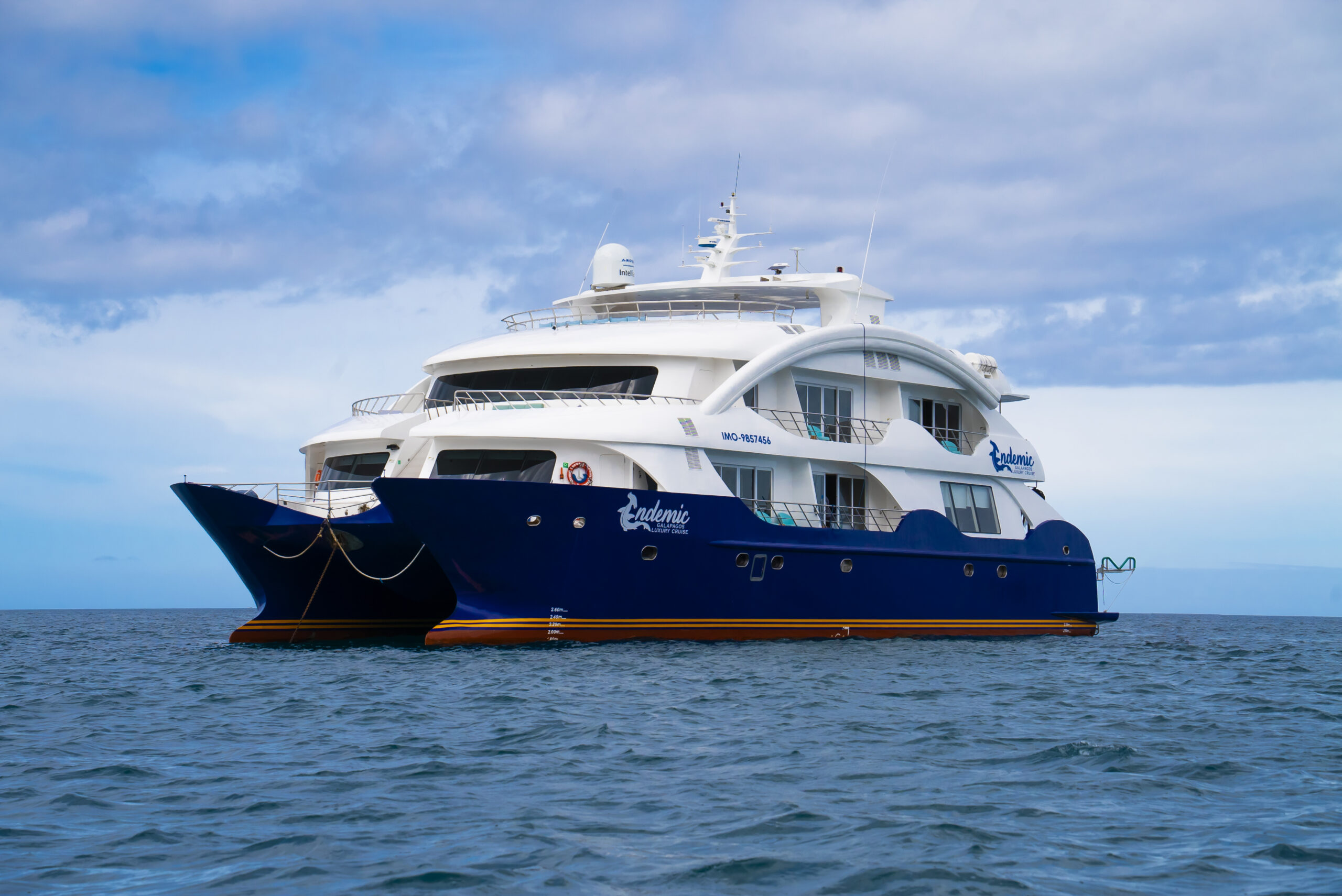
Exploring the Galápagos by sea is widely regarded as the most immersive and rewarding way to experience the archipelago. A vessel — whether a private yacht, a boutique expedition ship, or a small luxury cruiser - allows you to move between islands overnight, waking each morning in a new bay with a full day of exploration ahead. You can access the more remote, less-visited sites that are simply impossible to reach from land, and your days are structured entirely around wildlife encounters rather than logistics.
Aboard a well-chosen vessel, the rhythm of a Galápagos day is extraordinary: an early morning expedition by panga or kayak, snorkelling in crystal-clear water, a wildlife walk with your expert naturalist guide, lunch on deck, and another afternoon excursion before returning to watch the sun set over the Pacific. The sense of being genuinely immersed in the islands - rather than visiting them as a day trip - is transformative.
Private Yacht Charter For the most exclusive Galápagos experience, a private yacht charter places the entire vessel at your disposal. Your itinerary, your pace, your priorities - tailored entirely around your group. We work with a carefully selected fleet of private yachts ranging from intimate sailing vessels ideal for couples or small families, to larger, more luxurious motor yachts with elegant cabins, gourmet dining, and every comfort. Private charters are available for groups of any size and are the ultimate way to experience the archipelago.
Small Expedition Vessels & Boutique Cruisers For those who prefer the social experience of a small group, we also work with a selection of the finest boutique expedition vessels in the Galápagos - intimate ships carrying between eight and twenty guests, with expert naturalist guides, excellent cuisine, and a genuine commitment to responsible wildlife tourism.
By Land - Island-Based
A land-based Galápagos experience offers a different but equally rewarding way to explore the archipelago. Staying in one of the inhabited islands - most commonly Santa Cruz, Isabela, or San Cristóbal - you venture out each day on guided excursions by boat, returning to your lodge or hotel each evening. This approach is often preferred by families with young children, those who are concerned about seasickness, or travellers who simply value the comfort and space of a fixed base.
Land-based experiences can be combined with short inter-island flights, allowing you to visit multiple islands without spending nights at sea. The range of land-based accommodation has improved considerably in recent years, with a number of excellent boutique hotels and eco-lodges now available across the main islands.
We design land-based Galápagos itineraries with the same care and expertise as our cruise programmes - selecting the right base, the right excursions, and the right guides to ensure that your experience is every bit as extraordinary.
Combining Both
For many travellers, particularly those spending a week or more in the Galápagos, a combination of land and sea offers the best of both worlds — perhaps beginning with a few nights at a land-based lodge before joining a private charter, or spending time on one island before joining a short cruise to reach the more remote sites. We are always happy to discuss what combination might suit you best.
Travelling in Galápagos
The Galápagos is a rewarding destination year-round, but different seasons offer different highlights. The warm season (December to May) brings calmer seas, warmer water temperatures, and excellent snorkelling conditions - this is the best time for swimming and underwater encounters. The cool season (June to November) sees the arrival of the Humboldt Current, bringing nutrient-rich, cooler water that draws extraordinary marine life - including whale sharks, hammerhead sharks, and large schools of fish - and coincides with the nesting and hatching of many bird species.
Specific wildlife events to plan around include: waved albatross (Española, April to December); whale sharks (Darwin and Wolf islands, June to November); penguin and cormorant nesting (year-round, peaking in the cool season); giant tortoise nesting (November to February); and blue-footed booby chicks (variable, typically June to August).
Visitor Regulations - The Galápagos National Park strictly controls visitor access to protect its extraordinary ecosystems. All visitors must be accompanied by a licensed naturalist guide at all times within protected areas, and visitor sites have strictly enforced rules about distances from wildlife, paths to follow, and items that may be brought ashore. These regulations exist for excellent reasons - the long-term wellbeing of the islands and their wildlife - and your guide will ensure you are always fully informed.
A Galápagos National Park entry fee is payable on arrival (currently USD 200 per person for most nationalities). This fee contributes directly to the conservation of the islands.
Booking in Advance - Galápagos yacht charters and the finest cabin berths on expedition vessels are in high demand and book up well in advance — particularly for the peak seasons of December to January and June to August. We strongly recommend getting in touch with us as early as possible to secure the best availability, especially if you have specific dates or a particular vessel in mind.
Ready to Explore Galápagos?
Every Galápagos journey we plan is crafted with the same care and personal attention we bring to everything we do. Whether you are drawn by the wildlife, the volcanic landscapes, the snorkelling, or simply the idea of being somewhere truly unlike anywhere else on Earth - we would love to help you plan your perfect Galápagos journey.
Get in touch for a no-obligation conversation with our team. We respond personally to every enquiry, usually within 24 hours.